Health / Product design / Prototype
kinetica.
See how someone moves. Keep their words beside it.
An Android prototype for recording a guided movement, reviewing it against a 3D reference body, and noting what the patient reports.
Prototype · Not a medical device · Not publicly available
One consultant.
One patient.
The intended user is a consultant recording and reviewing a movement with a patient. The phone guides the action and records up to 15 seconds, or imports a longer video and trims the part that matters.
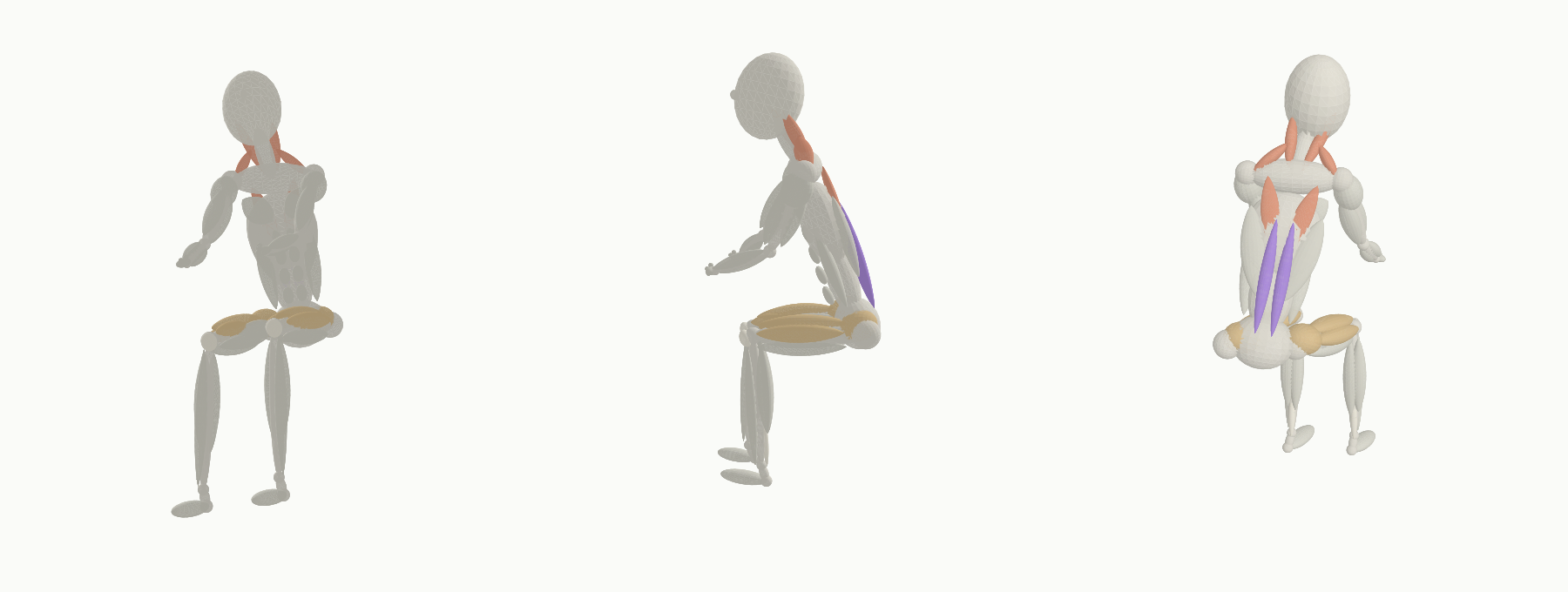
While recording, a provisional pose overlay and a 3D reference body follow along on the device.
The movement and the words.
Review on one timeline.
Review puts the video and the 3D view on one shared timeline. Kinetica estimates elbow and knee bend and upper-arm elevation, and shows how much of the movement it could track.
Beside the movement sit the patient's own words: where it hurts, on which side, how much and when, next to the consultant's findings. Everything can be saved on the device and exported as a PDF report.
It stays on the phone.
Kinetica runs on one device, with no accounts, no cloud storage and no background uploads. Once its pose model is on the phone, it needs no network at all.
The same interface also runs in a desktop browser.
The limits
What it
does not do.
Kinetica is an assessment aid. Its estimates have not been clinically validated, and the prototype is not a medical device.
Video cannot measure muscle activation, relaxation or the cause of pain. The 3D body is a generic reference, with 66 muscle and 19 skeletal surfaces on a 22-bone rig. It is not the patient's own anatomy.
Software tests are not clinical validation.